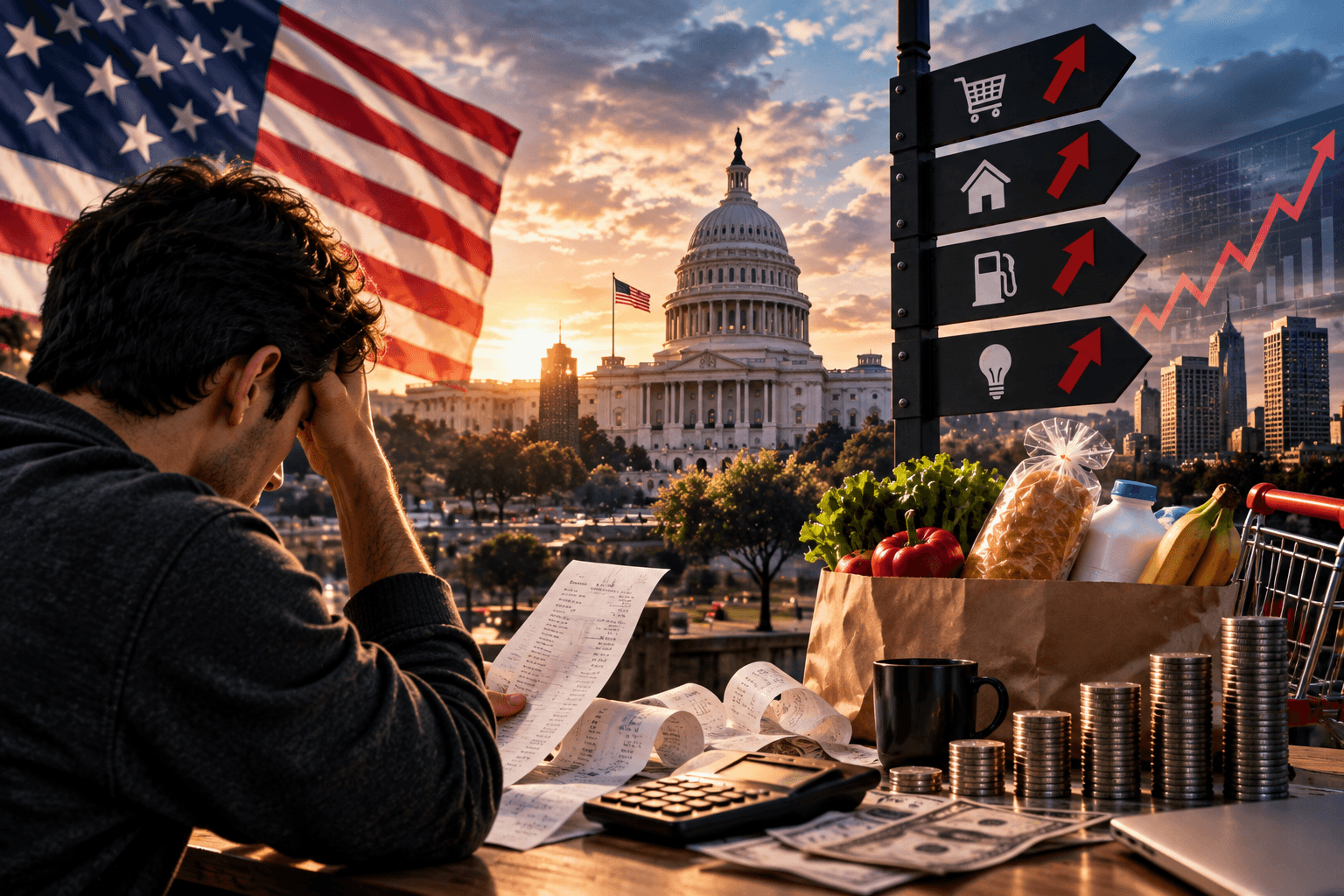
U.S. Inflation Outlook: Is the Cost-of-Living Crisis Really Ending?
U.S. inflation may be cooling, but everyday life still feels expensive for millions of Americans. Here’s why lower inflation doesn’t necessarily mean lower prices—and what it could mean for households and the economy ahead.
You’ve probably heard the good news: U.S. inflation is cooling.
Sounds great, right?
But then you walk into a grocery store, pay your rent, order dinner, or check your monthly bills—and things still don’t exactly feel cheap.
So what’s going on?
This is where inflation can be confusing. When economists say inflation is falling, they usually don’t mean prices are falling. They mean prices are rising more slowly than before.
Think about it this way. If something jumped from $100 to $110 during a period of high inflation and then inflation slowed, that $110 price doesn’t automatically return to $100. It might simply rise more slowly from there.
And that difference matters.
For millions of American households, the real question isn’t just whether the inflation rate is improving. It’s whether wages, housing costs, food prices and everyday expenses are finally moving in a direction that makes life feel affordable again.
That’s what we need to look at before declaring America’s cost-of-living crisis over.